Showing posts with label Research Notes. Show all posts

Monday, 23 January 2017

Barbara Kruger Research Post

Barbara Kruger

Context
Barbara Kruger was born in Newark, New Jersey, in 1945. Working for Mademoiselle Magazine, she was quickly promoted to head designer. Later, she worked as a graphic designer, art director, and picture editor in the art departments at House and Garden, Aperture, and other publications. She layers found photographs from existing sources with pithy and aggressive text that involves the viewer in the struggle for power and control that her captions speak to. Much of her text questions the viewer about feminism, classicism, consumerism, and individual autonomy and desire, although her black-and-white images are culled from the mainstream magazines that sell the very ideas she is disputing. 


Photography

This image from Barbara Kruger shows a puppet in the form of a man holding a sign with lines that we would perceive as hypnotising. Having the line "Repeat after me" tells us that we are being hypnotised into thinking certain things and taking orders from people that know their ideas are wrong but they still find a way to transfer them across to the people. The fact that it is in the form of a man shows that the men have all the power and they are giving orders to the women. This can also show that we are being given orders by puppets who are also being hypnotised. Barbara Kruger's feminism can be displayed in this image because she is showing how men are in charge and they have ultimate power.


This image from Barbara Kruger shows someone placing a needle in a haystack, the needle is surrounded by negative and positive words that we experience in every day life. The fact that the needle is being placed in the haystack surrounded by these words shows us that the words are forever going to be lost in the haystack with the needle. You will never be able to find the needle in the haystack. The slogan 'the meaning of life is that it stops' links to the picture because the needle can represent life and the words represent what we go through in life, the fact it is being placed in a haystack where it will never be found again shows that life is stopping. 


This image shows a woman's face, on one side it it normal and unedited but on the other side it looks like we are looking at an x-ray. The fact that the saying "Your body is a battleground" is written across the picture shows that we do things to our body such as getting plastic surgery etc that is changing our body. It can also show that women go through pain to look they way they want to. I think Barbara Kruger is trying to show that we shouldn't go through all this pain to look a certain way we should just embrace the way we look. I think she has used a picture of an x-ray next to a normal woman to show that when women change the way they look it isn't always for the better.

Monday, 16 January 2017

George Logan Research Post

George Longan

Context

Born in Bellshill, near Glasgow, Scotland, George studied at Blackpool College of Photography before moving to London where he is currently based. George is a muti-faceted talent, equally at home on location or in the studio, working with people, animals, locations or still life. George's work receives critical acclaim both in the UK and Internationally. He has three current travelling solo exhibitions in the UK and is a regular exhibitor at many of London's galleries. His work was also shown at the Shanghai International Photography Exhibition in China. He approaches his work with imagination, energy and lots of enthusiasm. His work is distinctive and unique. 

Photography


In this image we can see a wedding in a church and the bottom half of a groom and the bride, their tops halves have been replaced by a phone which has and image of two sports figures. I think the deeper meaning of this image is that sports people share the same love for each other because they have a close relationship and spend a lot of time together. This image is related to sport relationship and maybe the love that team mates share as they have to play together and co-operate well to be able to play the game well. I like the idea of using a phone to  place another image on top of the original image.


In this image we can see a group of pigs standing in the middle of the street. We can tell this image has been manipulated because we wouldn't normally see these type of animals in the middle of a normal street. I like this image because it gives an interpretation of imagination. I think this image could also be expressing the feelings of people who believe that caged animals in zoos are wrong. These pigs wouldn't be able to survive in this environment, he may be showing us that this environment is similar to the zoo environment. The fact that the sky is dull and dark gives a depressing effect on the image which tells us this isn't a happy image and it is giving us a deep message.


In this image we can see a normal countryside village but what really stands out is the fact that we can see an elephant walking through. Like the image before I think Logan is trying to show a view that animals shouldn't be caged in a zoo they should be allowed to walk free. The fact that we can't see the elephants face shows us that it has no identity, this could be linked to them living in a zoo as they don't have no real identity or life they just belong behind bars. I like this image because it is very obvious that it has been manipulated because we wouldn't see this in real life.

Thursday, 5 January 2017

Annie Leibovitz

Annie Leibovitz

She was born on October 2, 1949. She is the first woman to have held an exhibition at London’s National Portrait GalleryLeibovitz is much influenced by Richard Avedon. She began taking photos when her and her family moved around with her father who was in the U.S Air Force. She began working for the Rolling Stones magazine where people we attracted to her famous portraits of celebrities. 

Photography


In this image we can see Meryl Streep, she has white face paint on her face and she is pulling it in different directions. This image is a very plain image and there isn't much colour in it. The deeper meaning of this image can link to Meryl Streep and the fact that she is an actress. She has played many characters, the fact that she is pulling her face around can show this is how she feels when she has to go from character to character. Also, Leibovitz may be trying to show the actress in a different light rather than the make-up that we would normally see her with. This image is showing us that although we see these types of people with nice hair and make-up, this isn't what they look like all the time. It shows that young girls shouldn't inspire to be these people just because they look nice.


In this image we can see a little girl with blue eyes and dirt on her face, the wind is blowing her hair in her face. We recognise this image from the film les misérables. Looking at this image and not thinking of the film we see a little girl that look homeless because of the dirt on her face. The colour blue represents loyalty, wisdom, strength and trust. The fact that her eyes are blue shows us that although she may be homeless and have nothing she still has hope in her eyes and in her mind. The deeper meaning of this image can show that although you have nothing, if you hope and dream you might make it.


In this black and white image we can see Adele with her hair blowing in the wind. Unlink her image of Meryl Streep, Annie Leibovitz has made this image of Adele look attractive. In my opinion, she has made Adele look attractive because the media didn't display Adele as an attractive figure before 2016. The picture appears black and white to link with Adele's music. Her music is deep and sad which goes well with the colourless picture Leibovitz has produced. 

Monday, 12 December 2016

Peter Menzel and John Travis

Peter Menzel

Context
Peter J. Menzel (born February 7, 1948) is an American freelance photojournalist best known for his coverage of scientific and technological subjects. He travelled the world and went to different corners of the world, to richer and poorer countries to photograph families. Menzel captured the different possessions that each family had and showed the different between the richer and poorer countries. As well as showing the different possession they had in relation to rich people and poorer people he also displayed the different cultures in different countries by what they looked like and what they own. 

Photography


This picture was taken in Somalia. We can tell that this is a poor country because the house the family is living in is not a stable or luxury house, it looks like it is going to fall down. Although the family seems poor they have a lot of traditional and religious things, this makes us think that this may be a very traditional and religious country. I think Menzel would've wanted to photograph this family because although they are in a poor country and look like a poor family it is visible to us that they care a lot about their religion.


This photograph was taken in the USA. We can tell that this is a more wealthier country because not only is their house stable and big the houses surrounding it are too. By looking at the possessions they have in their house they seem like a wealthy family who are more focused by the luxuries in life as they have a piano and a tv for example. I think Menzel would've wanted to photograph this family because he wanted to capture how many Americans live as the majority live like this.


This photograph was taken in Japan. We can tell that this is the poorer part of the country by the lack of possessions they have. When we think of Japan we associate them with technology but this gives us a different interpretation as we realise that different parts of Japan may be wealthier than others. I think that Menzel would've wanted to photograph this family because he wanted to show that what we originally think about Japan is wrong.

Progression
I can use Menzel's ideas in my work because I can photograph different types of people such as poorer and wealthier people. 

John Travis
There wasn't much to say about this photographer so I cannot relate any context to his work. However, I was attracted to his work so I would like to use his ideas in my work.


Photography


These are some of John Travis's work, I like how he takes photo's of the person and their possessions and edits both the pictures together. This is a good way to represent them and their possessions because by having two separate pictures we can link the object with the person easier. 

Tuesday, 6 December 2016

Faye Godwin Landscapes

Faye Godwin

Context
Fay Godwin (17 February 1931 – 27 May 2005) was a British photographer known for her black-and-white landscapes of the British countryside and coast. Born Berlin, Germany, father a British diplomat, mother an American artist. Educated at various schools all over the world. 1958 Settled down to live in London. 1966 Became interested in photography through photographing her young children. Her early and mature work was informed by the sense of ecological crisis present in late 1970s and 1980s England. Her work is a celebration of the British countryside, a lament for what has been lost and a warning about what will happen if action is not taken to preserve it. Through her publishing connections she began photographing writers, primarily for use as publicity material. Godwin’s husband died suddenly in 1976 and at around the same time she was diagnosed with cancer. Godwin recovered, but afterwards the direction of her work began to change. ‘After being ill, I concentrated more on the landscape. In a sense, all the natural things became incredibly important,’ she said in an interview for ITV’s The South Bank Show in 1986.

Photography

In this image we are presented with a road and at the end of this road we can see a mountain. This image makes us focus on the nature in the picture rather than the road. She has added great focus on the mountain because when we look at the image this is the first thing we naturally see as it is the brightest part in the image. Faye Godwin works with tone well because she has created different tones throughout the image, for example the road is a much darker, dull tone whereas the mountain is a lighter tone. We can link this image to the context because she wanted to represent landscape as something we need to protect and if we carry on changing the natural world it won't stay like this forever. This links to the photograph because she has darkened the road to make it seem like it is evil/bad compared to the nature. When we look at this image we can see that she wanted the road not to stand out but by doing this we are more attracted to the meaning of the photo. It can also be linked to her cancer illness, the dark road represents the illness and what she went through but the mountain can be represented as her recovery because it is bright and powerful. 


In this image we are shown a path going through the middle of the picture and surrounding the path we see a field with trees and a fence. This image makes us focus on the field surrounding the path because it looks neglected and the things growing on it look dead, the fence also looks like it is broken. In this image she has used tones again, for example the trees are a very dark tone and the sky is a lighter tone. We would think that she would make the trees a lighter tone to show them off but we can see in this picture that she wants to add the effect to make the deserted field the main focus. I think this is because she wants to show that the field needs to be looked after. This links to the context of Faye Godwin because she wanted to represent the dangers of the way we are living as it is effecting the nature in the world, in this image she is telling us that we have to look after nature otherwise it will end up looking like this. Another message that can also be portrayed from this image is the fact that the man made path and fence is making land look deserted, everything beyond the fence and the path looks neglected and poor. 


In this image we can see the countryside, Godwin has used a variation of tones in this image. The different tones consist of darker ones in the background of the image and lighter tones in the foreground of the image. I think she has used these tones because it makes us think that as the countryside goes on it starts to fade away. In her images she shows the sky with lighter tones, I think the message that she is trying to show is that even though the sky is light the land is dark which tells us that nature is becoming non-existent and less intriguing. This can link to the fact that she wants to celebrate nature because thing image portrays the fact that we have to protect nature otherwise it will fade away. Also, we can relate this image with her cancer story, the darkness in the background represents her past and the illness, the lighter parts of the image can represent her recovery and the future.

Progression
From evaluating Faye Godwin's work I can use various aspects of her ideas in my work. I can use her use of tones in her images when editing my photos I can make pats of the image darker or lighter to send a clearer message. Also I can use her technique of grasping nature in my work by taking pictures of landscapes that portray a lot of nature in them.

Sunday, 6 November 2016

Ansel Adams

Ansel Adams

Context
Ansel Adams (Feb. 20 1902 — Apr. 22, 1984) was born in San Francisco, California. Adams grew up in a house set amid the sand dunes of the Golden Gate. In Adams’s childhood he displayed joy in nature. Adams like photographing landscaped but another photographer had a powerful impact on Adams and helped to move him away from the “pictorial” style. Adams began to pursue “straight photography,” in which the clarity of the lens was emphasised, and the final print gave no appearance of being manipulated in the camera or the darkroom. Techniques such as “burning” and “dodging”, as well as the Zone System, a scientific system developed by Adams, is used specifically to “manipulate” the tonality and give the artist the ability to create as opposed to record. 

Photography


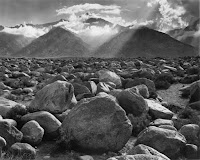
In this image we can see rocks in the foreground and in the background you can see some sort of mountain. We can see the different tones used in the image because both darker and lighter tones have been used. In the right hand side more darker tones have been used because the sun isn't hitting here the sun is hitting on the left side. This image links to tone because several different tones have been used in this image. It links to the context of the photographer because he grew up living in areas like this and he took pictures of mainly landscapes and things like that and this is a landscape. I can use ideas like this in my work by getting different sections of the image to have different tones.


In this image we can see mountains and a forest, in between we can see a lake. This image links to tone because we can see tone in the image. This has mainly only darker tones and lighter tones only on the mountains. The background of the image has mainly lighter tones and the foreground of the image has mainly darker tones. It links to the context of the photographer because he takes pictures of landscapes as he grew up living in conditions like this. I can use ideas like this in my work by have one main tone with other tones surrounding the main tone but not as bold.


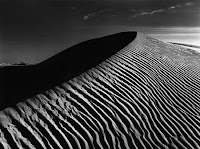
In this image we can see a sand dune. The image links to tone because there are different tones portrayed in the image. This has mainly lighter tones on the right hand side of the image and darker tones on the left hand side of the image. The lighter tones are due to the light being aimed at them and the darker tones are due to the fact that all the light is only coming from the right hand side. This links to the context of the artist because he grew up living near sand dunes so these were probably the first things he ever got to take pictures of. I can use ideas form this in my work because I can position lighting so that only on part of image is light and the other is dark.

Progression
To progress this artist further I will use the ideas from his various image and try to incorporate them in my work.

Vivian Maier

Vivian Maier

Context
Vivian Maier (February 1, 1926 – April 21, 2009) was an American street photographer born in New York City. Consistently taking photos over the course of five decades, she would shoot most of them in Chicago and New York City. Vivian Maier had a dark room where she would produce black and white photos, however she did end up progressing onto coloured pictures. She would mainly take pictures of people and landscapes but she replaced these with objects when she began taking colour pictures. Maier’s photos also betray an affinity for the poor, arguably because of an emotional kinship she felt with those struggling to get by. Her travels to search out the exotic caused her to seek out the unusual in her own backyard as well. 

Photography


This photo taken by Maier shows a man holding a mirror and her reflection can be seen in it but his isn't as visible. This photo makes you think because when you look into the reflection on the mirror you see a woman but the woman can't be seen behind the mirror. It took me a while to realise that the reflection of the woman was actually Vivian Maier behind the camera. This can also be perceived as surreal because when you look in the mirror you would expect to see the man's reflection. The photo relates to the context of Vivian Maier because she was into taking pictures of the less fortunate and the streets of America. This relates to this because she has taken a picture on a street which looks like a poorer area and she has shown a man working who looks less fortunate as his clothes show us that he is poorer. This image links to reflection because the main focus of the image is the mirror. I can use ideas like this in my work but in a different way because I can get people to hold mirrors so I can take pictures of their reflections.


This photo taken by Vivian Maier shows her to be taking a picture in a window looking out on her reflection so she  is the main focus of the image. This photo is clever because when we look at the image we see peacefulness because it looks like nothing is going on but when we look in the background we can see cars and people so we change our opinion and imagine the noises of a busy street. This photo links to the context of Vivian Maier because she was a street photographer and she has incorporated the street in the image and she took pictures mainly of the street. This image links to reflection because we are looking at a reflection. She has taken this picture well because although it is in a window we can see her clearly. I can take her ideas from this image by taking pictures in windows or mirrors showing myself but with a good background like the way she has.


This photo taken by Maier shows a woman and two children walking down a path with their reflection being shown in a puddle. I like this photo because although the image is black and white it doesn't look dull or unhappy because we can see the sun and the children in the image look like they are having fun. This photo links to the context of Vivian Maier because she was a street photographer and she liked to take pictures of the less fortunate. This was taken on a street and the people in the photo don't look like they are rich. This image links to reflection because we can see the peoples reflection in the puddle clearly. The reflection is the main focus of the image because the puddle is in the majority of the image. I can use ideas like this in my work because I can take pictures of reflections in puddles or water.

Progression
To progress this photographer further I will try to incorporate some of her ideas in my work such as the street photography and the reflections. 

Tuesday, 25 October 2016

Bill Brandt

Bill Brandt

Context
Bill Brandt (2 May 1904 – 20 December 1983),was a British photographer and photojournalist. He became well known for his distorted nude images. Brandt lived through the war and to celebrate the end of the war he produced distorted nude images. The reason for his nude images was because he wanted to show poetry through his images, he had been to Paris where he learnt how to express poetry through his photographs. Brandt's photography also shows a sense of surrealism because when he takes pictures he takes them in a way that it takes us a long time to realise what it is.

Photography


In this image we can see conjoined fingers and stones. This image links to shape because Bill Brandt uses shape in his work but not normal shapes that we would think of, he uses shape in the form of the human body. This links to the context of the photographer because he likes taking pictures of body parts, I think that he does this to celebrate the body and human life. I like this image because although it is black and white the tones of the image make us feel happy rather than dull. The fact that this is taken on a beach where Brandt likes to take his images shows us that it is in a happy place. I can use ideas from this photo in my work because I like the way that he has taken human body parts and used them to create shape.


In this image we can see the behind of a female body. This relates to shape because we can see the shape of the female body well as the angle of the camera isn't wide and it fairly zoomed in. This links to the context of the photographer because he likes to take images of the human body. The fact that he has taken a picture of the female body could show that he is taking these image for sexual reasons or for an actual meaning. Personally, I don't think that he is taking these images for a sexual preference because he wants to celebrate the body and the fact that he is using the female body could show that he is a feminist. I can use his ideas in my work by taking images of something that people would have to think about.


In this image we can see someones knees and elbow. This relates to shape because we can make out shapes from the body parts. This also links to the context of the artist because he likes taking pictures of the human body.  This image also shows a sense of surrealism because the way he has taken this image we have to look deeper into the image to realise what we are looking at. I like this image because we although it seems dull and depressing we get a relaxing feeling through the image because it looks calm and peaceful. I can use his ideas in my work by using tone and shape together to bring a better effect to the image.

Progression
To progress this artist further I will use some of his ideas in my work so I can create better photos.

Wednesday, 12 October 2016

Edward Weston

Context
Edward Henry Weston was born March 24, 1886. He began photographing at the age of sixteen after receiving a Bull’s Eye #2 camera from his father. Weston’s first photographs captured the parks of Chicago and his aunt’s farm. We can see that this links to his work because many of his photographs consist of natural objects such as shells and we also see him capture pictures of vegetables such as mushrooms. After this Weston progressed with a new emphasis on abstract form and sharper resolution of detail. We can see this progress in his work because of the way he captures texture of the objects and the way he creates an angle that we have to look deeper into the image to see what the object is. Weston's work for which he is most deservedly famous consists of natural forms, close-ups, nudes, and landscapes which is the main images that I am looking at.

Photography
To progress my work with this photographer I have taken a few of his images to analyse.


When we first look at this image we see a shell but the angle that it has been positioned at some people might not be able to tell what it is. This image and many other of his photographs has an element of mystery because it takes us a while to grasp what the image actually is. The fact that Edward Weston is famous for his natural form photography links to this image because it represents natural life as it is a shell. Also, the fact that he began taking pictures on a farm links to the picture because on the farm he would've been taking images of simple things like stones and this image shows how a simple thing can be turned into an image that people have to actually think about. I like this image because we can see the texture of the shell and the angle of the image draws us in even though the image is in black and white. I can use ideas like this in my work because I can take images of things that are boring but make them come alive by attracting people to the way I have taken the image.


When we first look at this image we see a mushroom but when we look deeper into the image we focus on the texture of the mushroom and how the photographer has created great focus on the small details of the mushroom. The way Weston has positioned this object we almost look at the mushroom as a tree because of the shape of it. This links to the context of the artist because this is a vegetable and as he began photographing on a farm this is almost a progressed photo of what he first did. The texture of this can be seen as rough as the edges are not smooth. Also the photographer has used hard lighting to show his work this suggests to us that he wanted us to see the texture of the mushroom purposely. 


When we first look at this image we see a onion or maybe a leek, some sort of vegetable and we are instantly drawn to the texture of it. Looking deeper into this image we could maybe see a face by the middle parts being represented as eyes. In a way Weston brings the vegetables to life as he gives them a purpose and shows us the detail that we don't always recognise. Personally, when I look at this image I think of leather because it looks hard  and tough. He has taken this image and made the texture of the vegetable seem different to what we instantly think. Again this image links to the context of the artist because he is photographing vegetables which he would've been taking pictures of at the farm. 

Progression
To progress I am going to use Edward Weston's ideas in my work because I like the way he uses the angle of his camera and lighting to present texture of his objects.